| |
| Wednesday, 04 November 2026 |
| Viking Gods and Valkyries: The Art of Norse Mythology |
| James Vaux |
 |
This lecture explores how Norse myths and legends have been portrayed in the decorative and fine arts over more than 1,300 years, to reveal quite how few depictions we have, and the sometimes sinister reasons we may not see them. The talk begins with a brief overview of the pantheon of deities, the Norse creation story and Ragnarök, the twilight of the gods. It then looks at Viking-age representations in wood, stone and metalwork and the effect of Christianisation. It continues with the rediscovery of Norse Mythology in the 18th century in age gripped by romanticism, then 19th century paintings and sculpture created in a period of Scandinavian nationalism. Finally, the talk turns to the appropriation of mythological images by the Nazi regime and more recent re-interpretations of Thor, Odin, Loki and the Valkyries in cartoon, Manga and film as well as conceptual art. Works examined include paintings and illustrations by Henry Fuseli and William Blake, academic history paintings from Norway, Sweden and Denmark, 19th century sculpture, and 20th century works by Carl Larsson, Hilma af Klint and Anselm Kiefer. James Vaux: James is a researcher and lecturer specialising in Nordic arts, culture, design and history. He has presented extensively on diverse topics throughout his career to demanding audiences across the globe, including CEOs and government ministers. His talks now focus on understanding art through its historic, cultural and political context. James aims to question conventional art world narratives about painters, designers and movements, to unveil the hidden forces that lie beneath great art. James took a law degree at Oxford with First Class Honours and qualified as a solicitor before switching career. As a managing director of the international bank Rothschild, he advised governments and corporates worldwide. He set up and ran the bank’s Nordic operations, living and working in Scandinavia and immersing himself in the countries’ arts, culture and history. James then gained an MA (Distinction) at UCL in Language, Culture and History (Scandinavian Studies). His dissertation was on Swedish design, and he specialised in landscapes, the Viking Age, politics and literature. |
|
| Wednesday, 02 December 2026 |
| A FESTIVE TALE: THE STORY OF CHRISTMAS MUSIC |
| Raymond Holden |
 |
Christmas would not be Christmas without music. And the story of what we perform, listen to and share at that most festive of seasons is both fascinating and transformative. Having had its roots in Rome during the fourth century with chants like Veni redemptor gentium, Christmas music has since gone on to become one of mankind’s most enduring cultural and religious phenomena. Whether it is heard as part of the liturgy or at the cinema, Christmas music never fails to trigger a sense of wonderment. Using carefully chosen sound recordings and film clips, this lecture will trace the history and impact of Christmas music from its Roman roots to the present day. RAYMOND HOLDEN: Born in Australia, Professor Raymond Holden AM studied at Sydney, Cologne and London and is both a critically acclaimed and a multi-award winning writer, conductor, broadcaster and lecturer. He has performed with the Philharmonia Orchestra, the Danish Radio Symphony Orchestra, the BBC Symphony Orchestra, the Orchestra of the Emilia Romagna and the New Symphony Orchestra of London, and has been published regularly by Oxford, Cambridge and Yale University Presses, the Royal Academy of Music Press, Hans Schneider Verlag (Vienna) and by ICA, EMI and Warner Classics. Professor Holden has appeared on BBC Television and Radio, Servus TV (Germany), RAI Television and Radio, ABC Classic FM, 3MBS FM, Vision Australia Radio, SRF (Switzerland) and Classic FM (South Africa), and has spoken at many of the world’s leading music and literary festivals, universities, conservatoires and research institutes. He was appointed a Member of the Order of Australia (AM) in the 2019 Queen’s Birthday Honours List and is currently Emeritus Professor of Music at the Royal Academy of Music, London. |
|
| Wednesday, 03 February 2027 |
| What have the Hugenots ever done for us? |
| Vivienne Laws |
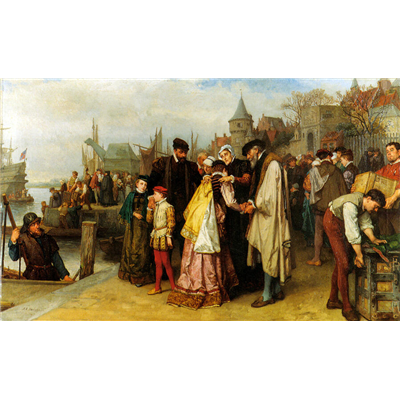 |
The mass migration of the French Protestant Huguenots in the 16th and 17th centuries impacted the arts, the military and finance sectors of the countries to which they fled after suffering Catholic persecution in their homeland. It is estimated that upwards of 50,000 people settled in the British Isles, and that perhaps one in six of the country’s current population descends from Huguenot lineage. This lecture focuses on three areas of the arts impacted by the migration: the baroque style of Versailles that arrived in London through the great Huguenot designer, Daniel Marot, who worked for William and Mary at Hampton Court; the growth of the silk weaving industry in Canterbury, Spitalfields and later Sudbury and Macclesfield; and on the silversmiths and ceramicists who ushered the French Rococo style into Britain. This is put into the context of how their work changed material culture and was absorbed into British national identity. |
|
| Wednesday, 03 March 2027 |
| Mythology in Art |
| Clare Ford-Wille |
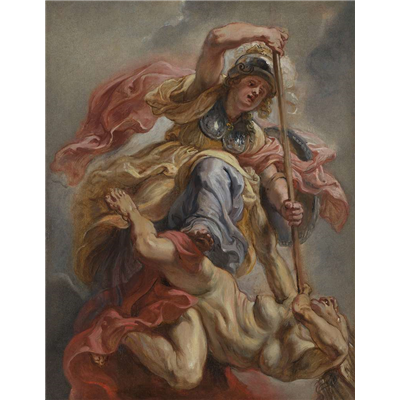 |
An excursion through many examples of Mythology in Art. CLARE'S Biography: Honours degree in History of Art, Birkbeck College, University of London. Regular commitments include Centre for Lifelong Learning, London University, National Gallery, V&A Museum, WEA, Morley College, the City Literary Institute, the Art Fund and National Trust |
|
| Wednesday, 07 April 2027 |
| Charles Rennie Mackintosh |
| Rosalind Whyte |
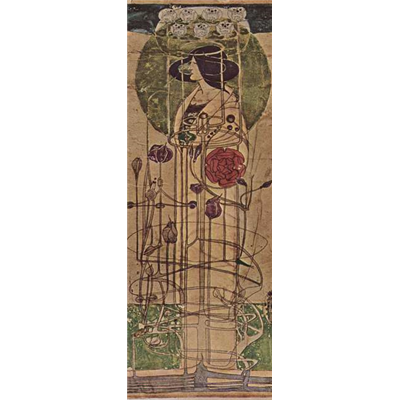 |
Scottish architect, designer and artist Charles Rennie Mackintosh is now a well-known name and a major draw for the tourist industry in Glasgow, with several of his buildings still existing, as well as his designs for Tea Rooms. However, his work was not always so well received and, following some early success, which included his architectural masterpiece, the Glasgow School of Art, his prospects floundered. In this lecture we track him from that early success in his native Glasgow, through the years of doubt and struggle, ultimately to the South of France where he enjoyed the last few years of his life travelling with his wife and collaborator Margaret and reinvented himself as a water colour painter. With a wonderful array of beautifully designed buildings, furniture and interiors to enjoy along the way, we explore the life and work of this much loved artist and architect. |
|
| Wednesday, 05 May 2027 |
| T.E Lawrence, Leonard Woolley and the Wilderness of Zin |
| Sam Moorhead |
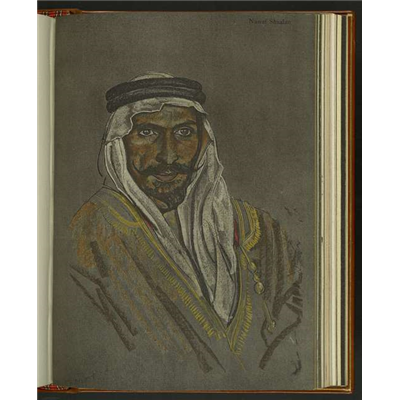 |
As trauma grips the Middle East today, it is interesting to go back a hundred years to the last year of peace in the region before the outbreak of World War One. The Ottoman Empire was still the major power in the Levant, but Britain and Germany both had major interests in the Eastern Mediterranean. With this in mind, Lord Kitchener realised the importance of completing the Palestine Exploration Fund’s mapping of the Holy Land; the Negeb Desert south of Beersheba had not been covered in the 19th century survey. Therefore, in December 1913, a Royal Engineers cartographic team was sent into the Wilderness of Zin in southern Palestine, with an archaeological smokescreen provided by the PEF which employed two young archaeologists who were later to become famous in their own right: Leonard Woolley and T. E. Lawrence. This short episode brings together numerous strands of political, military, archaeological and social activity on the eve of the Great War, and was also to be an essential experience for the future Lawrence of Arabia. Sam Moorhead edited the latest version of The Wilderness of Zin, published by the PEF and Stacey International in 2003. This lecture contains images of the archaeological sites visited by Lawrence and Woolley – many are photographs and drawings made by the two men during the survey – and extensive archival material from the Palestine Exploration Fund’s collection. |
|
| Wednesday, 02 June 2027 |
| Mind Your Mannerism |
| Mariska Beekenkamp |
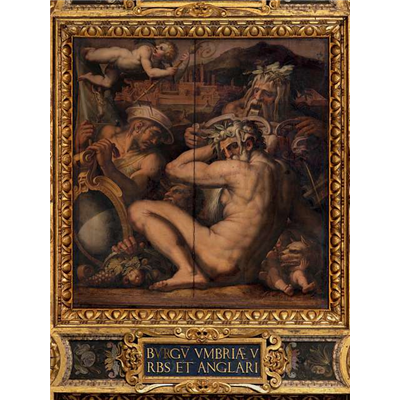 |
A little known art movement, happening right at the end of the European Renaissance, and before the Baroque, Mannerism has divided opinion since the moment it developed. As a movement catering for ultra-sophisticated courtiers and collectors, this was definitely never meant as a mainstream trend. With its elongated, twisted bodies and idealised faces the figures seem far removed for the naturalism that was sweeping through Europe. The subject and meaning of the artworks are often unclear, and the depictions complex and impossible. Time to dive into the ins and outs of this short lived style! Join Mariska as we introduce the ‘manniera’ of some extremely skilled artists, who were pushing the boundaries of art and what it depicts. This virtual journey through the Mannerist art movement will include: -Its existence within the context of Art Historical discourse -Historical, religious and socio-economic background of 16th century Europe -Explanation of the iconography and symbolism used -Some of its main players like Michelangelo, Bronzino, Parmigianino, El Greco and others -Courts and countries where this style flourished |
|
| Wednesday, 07 July 2027 |
| Gainsborough and the theatre, Staging the Spectacle |
| Matthew Morgan |
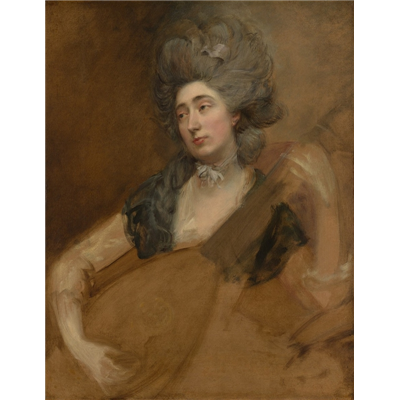 |
2027 is the 300th anniversary of Gainsborough. Painting and Celebrity have always gone hand in hand - and never more so than in the 18th Century. The Royal Academy's first home was in Somerset House on the Strand. Just a few minutes' walk away were the Drury Lane Theatre and the Theatre Royal. However, theatres were disreputable with fights common, while actresses were thought of having questionable respectability. How do Gainsborough's many portraits of actors and actresses show this symbiotic relationship? This lecture will look at the entwined histories of portrait painting and the theatre in the 18th Century and explore the example of Gainsborough's portrait of Mary Robinson, actress, poet and courtesan. |
|
| Wednesday, 01 September 2027 |
| The Century of Deception:The Birth of Hoax in the Eighteenth Century |
| Ian Keable |
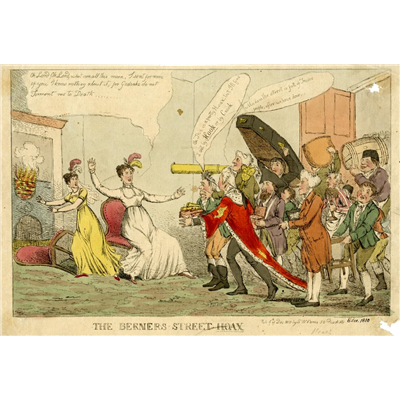 |
The 1700s was a period when the people of England seemed to be especially gullible. They believed a woman could give birth to rabbits; a man could climb inside a two pint bottle and sing inside it; and where a blond-haired European could write a book claiming that he was born in Taiwan. These hoaxes weren't just written about extensively in newspapers and journals but also brilliantly and amusingly depicted by satirical artists such as William Hogarth and James Gillray. In this entertaining talk Ian demonstrates how 18th century hoaxes are memorable not only for their imaginative nature but also because of the differing motives of the tricksters. Included in the talk are some hoax-related magic tricks. |
|
| Wednesday, 06 October 2027 |
| Faber and Faber: 90 years of cover design |
| Toby Faber |
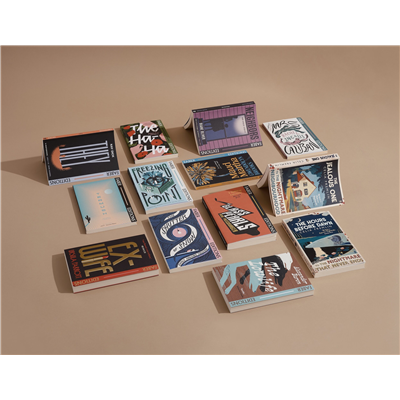 |
The founder's grandson tells story of the publisher, Faber & Faber, and of the art used on its books, from its beginnings to the present day. Since its foundation in 1925, Faber and Faber has built a reputation as one of London’s most important literary publishing houses. Part of that relates to the editorial team that Geoffrey Faber and his successors built around them - TS Eliot was famously an early recruit - but a large part is also due to the firm’s insistence on good design and illustration. Early years brought innovations like the Ariel Poems – single poems, beautifully illustrated, sold in their own envelopes - and contacts with some of the great artists of the inter-war years. From the 1940s, there was an emphasis on typography, led by the firm’s art director Berthold Wolpe; his Albertus font is still used on City of London road signs. In the 1980s, the firm started its association with Pentagram, responsible for the ff logo. Along the way, it has employed some of our most celebrated artists as cover illustrators – from Rex Whistler and Barnett Freedman to Peter Blake and Damien Hirst. The talk will also be peppered with personal insight and anecdote. Faber and Faber is the last of the great publishing houses to remain independent. As the grandson of its founder, Tony grew up steeped in its books. Tony was managing director for four years and remains on the board. He is passionate about the firm’s success, and intensely proud of his association with it. |
|
| Wednesday, 03 November 2027 |
| Poet in Paint: The Art and Life of Paul Nash |
| David Haycock |
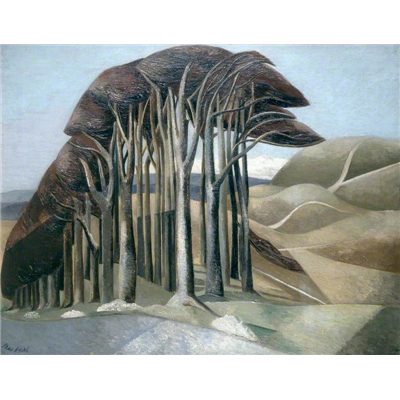 |
Born in Cookham-on-Thames, Berkshire, in 1891, Stanley Spencer went on to become one of the best-known, best-loved and most eccentric British artists of the twentieth century. His paintings focused on religion, love, landscape and war – many of them painted in his beloved Cookham, the place he called his ‘corner of paradise.’ One of the five artists looked at in David Haycock's book, "A Crisis of Brilliance", this lecture explores the visionary art and extraordinary life of the man who was described by one of his fellow Slade students, Paul Nash, as ‘the last Pre-Raphaelite.’ |
|
| Wednesday, 01 December 2027 |
| Gold, Frankinsense and MIRTH: A visual history of Gift-Giving |
| Marie-Anne Mancio |
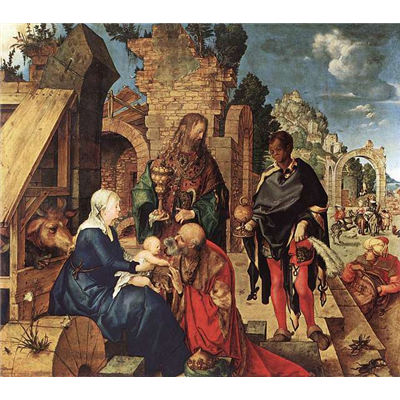 |
As Christmas approaches, we inevitably think about gifts. This light-hearted look at the tradition of giving, traces the history from the origins of Santa Claus, to a thirteenth-century elephant, to elegant Renaissance Magi, to the print of a shell Rembrandt made when he was broke, to a period when Christmas was almost banned, to sentimental nineteenth-century paintings where a present arrived just in time... Which royal got a chimney sweeper costume and a toy kitchen on Christmas Day? Whose gift took twenty years to make? The lecture also touches on other occasions of gift giving: why did Man Ray give an iron with spikes as a wedding gift? What made Sophie Calle store all her birthday gifts, unused, in cabinets? And what is the worst gift ever recorded? |
|